



Water purification systems aren’t all created equal. There is a wide array of options in the market, with products of varying quality and function.
Despite the numerous choices, however, professionals always advise choosing a device that has earned the National Sanitation Foundation (NSF) seal of approval. Established in 1944 in Michigan, United States, NSF is an international, independent certification body that facilitates the development of public health standards through rigorous product testing.
These tests are carried out by the organisation’s engineers, microbiologists, toxicologists, chemists, and public health experts from over 180 countries, working in 293,000 square feet of state-of-the-art laboratories.
This is why the NSF mark on a product serves as a guarantee to customers, retailers, and regulators of its high quality and safety, as well as its fulfilment of the manufacturer’s pledges.
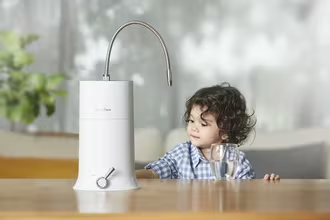
It also means that when you purchase the NSF-certified HomePure Nova water filtration system, you’re getting, as advertised, a purification system that filters out 99.99% of bacteria, viruses, chemicals and toxins from tap water.
Ensuring Safety
Most water filtration systems on the market do little more than remove chlorine and sediment, along with essential minerals, from drinking water.
Where the HomePure Nova differs is that it is the only device to employ a unique 9-stage filtration system that removes impurities via activated carbon block and sediment filters; coral sand from Japan; antibacterial silver stone and antibacterial carbon powder; far infrared ray, negative ion and pi-water ceramic balls; and the revolutionary 35⁺ ultratech fibre membrane.
HomePure water filters are, and have always been, regarded as best-in-class for households due to their ultrafiltration technology. And the addition of the 35⁺ ultratech fibre membrane, which can excise harmful bacteria such as coliform and E. coli, once again sets it apart from regular filtration systems.
Importantly, the HomePure Nova is the only ultrafiltration system to have earned three NSF certifications — NSF/ANSI 42, NSF/ANSI 53, and NSF/ANSI 401 — that endorse a total of 15 claims about the product.
This, along with the HomePure Nova’s receipt of the prestigious Gold Seal from the Illinois-based Water Quality Association (WQA), makes the HomePure Nova the world’s first-ever water purification system to be certified for its ability to reduce the spread of pathogenic bacteria and viruses in drinking water.
Changing Filters
Regardless of their performance, however, all water purification systems must be maintained and kept in optimal condition. This is primarily done by replacing the device’s filter cartridges or discs when required.
Essentially, filters trap and/or absorb contaminants in the purification process, which, over time, results in filters becoming full and clogged with debris to the point that water cannot pass through.
To ensure your filtration system continues to provide purified water for you and your family, it is important to replace filters when they’ve reached the end of their lifespan.
Note, though, that change cycles vary from one device to the next. As such, it’s important to heed the manufacturer’s advice — usually detailed in the owner’s manual or on product packaging — about filter replacement.
Some products, however, are equipped with indicators that take the guesswork out and let you know when filters ought to be changed. And in the case of HomePure Nova, this is facilitated by an Enhanced LED Indicator, which identifies different stages in the filter cartridge’s lifespan via distinctive coloured lights and buzzer beeps.
Incidentally, the lifespan of a HomePure Nova filter cartridge is approximately 5,000 litres or 12 months. This, bearing in mind usage and the quality of tap water, means users need only concern themselves with filter replacements once a year.
Don’t Swap It Out
But while replacing cartridges is necessary, it’s important to remember that filters aren’t all the same.
Indeed, there are uncertified, imitation cartridges in the market that may appear similar in size and even fit inside the housing of water treatment systems. However, even the smallest size difference in these cartridges can result in contaminants in drinking water not being filtered.
To ensure your water treatment system is performing effectively, always use the proper replacement cartridges and change your filters as recommended.
Remember, at the end of the day, it’s about getting uncontaminated hydration and nourishment from the water we drink, and making sure that you and your loved ones are healthy and safe.
This article was originally published on 23 March 2016 and has been updated with new information.